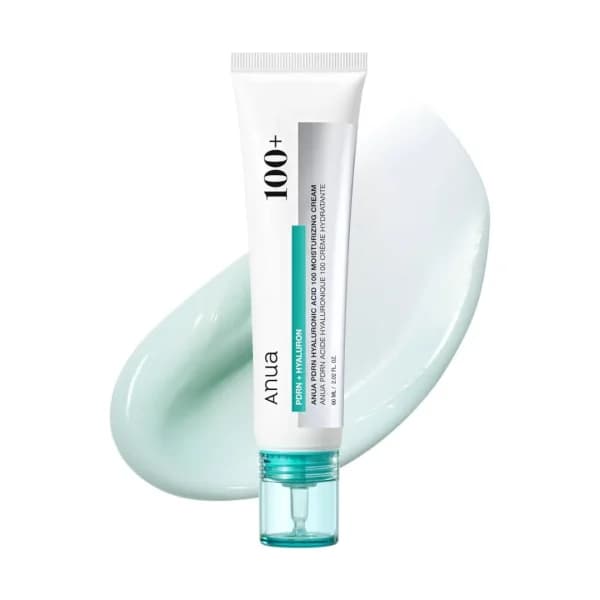
Anua PDRN Hyaluronic Acid Moisturizing Cleansing Foam ত্বকের ময়লা, অতিরিক্ত তেল ও বিল্ডআপ পরিষ্কার করে। PDRN, Hyaluronic Acid ও Glycerin ত্বকের আর্দ্রতা বজায় রেখে স্কিন সফট, স্মুথ ও সতেজ রাখতে সাহায্য করে।
Anua PDRN Hyaluronic Acid Moisturizing Cleansing Foam is a Korean facial cleanser, from Anua — a brand of The Founders Inc., Seoul. The name puts two ingredients front and centre, and the formula lists eight separate forms of hyaluronic acid across its 51 ingredients.
Every one of those eight sits in the bottom half of the list — the highest at position 30, the lowest dead last at 51 — in a product you rinse off after a minute. That sounds like a straightforward criticism, and it would be, except that the first ingredient on the list is glycerin, placed above water, which is unusual and genuinely good.
The three sections below work through what actually makes this a moisturising cleanser, what the surfactant system reveals about the stated pH, and an ingredient cluster that will be unexpectedly familiar to anyone in Bangladesh.
Product Overview
Anua is a Korean skincare brand of The Founders Inc., based in Gangnam-gu, Seoul, and this is the PDRN Hyaluron cleansing foam — a 150ml tube of creamy cleanser marketed as moisturising, with a two-in-one use: a conventional foam wash, or a one-minute wash-off pack.
The pack’s own directions are brief: apply a proper amount to make foam, massage gently on the face, and remove with tepid water.
What the packaging does not tell you is where the named ingredients sit, and that is the whole story. With 51 ingredients and no stated concentrations, the order is the only information available — and it is unusually informative here, because one ingredient is in a position almost no cleanser puts it in, and eight others are in positions that tell you not to expect much.
The short version: this is a genuinely well-built, genuinely mild cleanser with an excellent surfactant system, and it earns its “moisturising” claim — just not through the ingredient in its name.
Glycerin First, Eight Hyaluronic Acids Last
The good news comes first, literally
Glycerin is at position 1 — above water.
That is rare and worth pausing on. Virtually every cleanser on the market begins with water. Glycerin appearing above it means glycerin is the single largest component of this formula by weight, which is a very high load for a cleansing product.
And unlike almost everything else in a cleanser, glycerin genuinely works in a rinse-off. It is a small molecule, it is strongly hygroscopic, and research on cleanser formulation has consistently found that high glycerin content measurably reduces the dryness and tightness people feel after washing. It is one of the few humectants that makes a real difference in a product that goes down the drain.
So the “moisturising cleansing foam” claim is honest. It is just earned by ingredient number 1 rather than by the ingredient in the product’s name.
Now the eight hyaluronic acids
The formula contains eight distinct hyaluronic acid derivatives. Here they are, with positions:
- Sodium Hyaluronate — 30
- Hydroxypropyltrimonium Hyaluronate — 31
- Hydrolyzed Hyaluronic Acid — 35
- Hyaluronic Acid — 45
- Hydrolyzed Sodium Hyaluronate — 46
- Potassium Hyaluronate — 47
- Sodium Hyaluronate Crosspolymer — 48
- Sodium Acetylated Hyaluronate — 51
The highest of the eight is at position 30 of 51. The lowest is the final ingredient on the entire list.
Using several molecular weights of hyaluronic acid is a legitimate formulation idea — larger molecules form a surface film, smaller ones migrate slightly further into the upper skin layers. In a leave-on serum, eight forms would be a genuinely sophisticated system.
But this is a cleanser, and that changes everything
Here is the decisive point, and it is not about concentration at all.
Hyaluronic acid is a water-soluble polymer. A cleanser is a water-based surfactant solution whose entire purpose is to lift material off your skin and carry it away.
So a water-soluble humectant in a cleanser faces three problems at once:
- Contact time — thirty to sixty seconds, against the hours a leave-on product gets
- Dilution — you add water and lather it, diluting the already-small amount many times over
- The surfactants themselves — the six cleansing agents sitting at positions 3 through 14 are designed to keep material suspended in water so it rinses away. They work directly against anything water-soluble depositing on your skin.
Hyaluronic acid in a cleanser is washed off by the very ingredients placed above it. That is not a flaw in this product specifically — it applies to every HA cleanser on the market, and there are a great many.
The one route that does exist
To be fair, the formula contains the mechanism that makes deposition possible at all.
Polyquaternium-67 at position 18 is a cationic — positively charged — conditioning polymer. In a cleanser, a cationic polymer and an anionic surfactant separate out of solution as a gel-like complex when you dilute them with rinse water, and that complex deposits on the skin. It is the same mechanism that makes conditioning shampoos work.
Also notable: hydroxypropyltrimonium hyaluronate at position 31 is the cationic form of hyaluronic acid — chemically modified to carry a positive charge, specifically so it can deposit onto negatively charged skin rather than rinsing away. Of the eight HAs, it is the one with a genuine mechanism in a rinse-off product.
So something does deposit. It is a thin film, it is contributed mainly by one cationic polymer and one cationic HA, and it is real — just much smaller than “eight types of hyaluronic acid” suggests.
Reading it honestly
This is a good moisturising cleanser. Glycerin at position 1 is doing substantial, evidence-backed work, and a cationic polymer gives a modest deposition route on top of it.
What it is not is a hyaluronic acid treatment. If you want HA working on your skin, it needs to come from a leave-on product — a toner, essence, serum or moisturiser applied after cleansing and left there. Buy this cleanser for its glycerin content and its excellent surfactant system, and get your hyaluronic acid from the next step of your routine.
Six Mild Surfactants, One Soap, and What pH 6 Really Means
The cleansing system is the genuinely impressive part of this formula, and it also explains something the marketing gets slightly wrong.
Six surfactants, none of them a sulfate
- Sodium Cocoyl Glycinate — 3. An amino acid surfactant built on glycine. Mild, with excellent dense foam.
- Sodium Lauroyl Glutamate — 5. Built on glutamic acid, and among the mildest cleansing surfactants in commercial use. A premium ingredient.
- Lauryl Betaine — 6. Amphoteric, carrying both charges. Boosts foam and reduces the irritation potential of the system as a whole.
- Sodium Methyl Cocoyl Taurate — 9. A taurate — very mild, and notably good at foaming in hard water, which matters in Bangladesh.
- Potassium Cocoyl Glycinate — 10. Another amino acid surfactant.
- Sodium Lauroyl Methylaminopropionate — 12. An amphoteric aminopropionate, mild and foam-supporting.
There is no sodium lauryl sulfate and no sodium laureth sulfate anywhere in the 51 ingredients. Amino acid surfactants are the gentlest cleansing category available and they cost several times what a sulfate does. Building a system from six of them is a serious formulation decision, and it is why this cleanser should feel genuinely soft rather than stripping.
And then, at position 14, there is soap
Potassium Cocoate is the potassium salt of coconut fatty acids. That is liquid soap — the same chemistry as a soap bar, in potassium rather than sodium form.
Its presence is deliberate, because soap does two things the amino acid surfactants do less well: it produces a large, voluminous lather, and it gives that distinctly “properly clean” feeling people associate with a good wash. Plenty of well-regarded Korean cleansers are built on exactly this hybrid.
But soap carries a chemical requirement, and it is the key to the pH question.
Why the cleanser is pH 6 and not lower
The brand states a pH of approximately 6, describing the cleanser as mildly acidic.
Worth being precise: pH 6 is not mildly acidic for skin — it is near-neutral. Healthy skin maintains a surface pH of roughly 4.5 to 5.5. A value of 6 sits above that range, not within it.
And the ingredient list explains exactly why it cannot go lower. Soap only exists in alkaline conditions. Drop the pH of a soap-containing formula much below about 8 and the fatty acid salts revert to free fatty acids — the soap stops being soap and stops lathering.
So the formulator has done something clever: citric acid at position 11 and sodium citrate at position 49 form a buffer system that pulls the pH down and holds it there against the soap’s tendency to push it up. pH 6 is the compromise — as low as you can take a formula containing soap while keeping the soap functional.
What that means for your skin, honestly
pH 6 is far better than it sounds relative to the alternative. A true soap bar sits at pH 9 to 10 and raises skin pH for two to six hours afterwards. A cleanser at pH 6 causes a much smaller disturbance, and skin buffers back from it within a comparatively short time.
Where it matters:
- For most skin, it is a non-issue. Six mild amino acid surfactants at pH 6 will feel far gentler than a soap at pH 9.
- If you use acids — a BHA or AHA — a cleanser at pH 6 leaves your skin surface slightly above its natural range, which can partly neutralise an acid applied immediately afterwards. Give it a few minutes, or use a lower-pH cleanser on acid nights.
- If your barrier is genuinely compromised — eczema, severe dryness, active dermatitis — a cleanser formulated at 5 to 5.5 with no soap component is a better choice.
The fair summary: this is a well-controlled, genuinely mild hybrid cleanser, and “near-neutral” describes it more accurately than “mildly acidic.” That is a labelling quibble rather than a formulation problem.
Two more things worth naming
Hydroxypropyl Starch Phosphate at position 8 is a starch-derived thickener. It is what gives the product its creamy, dense texture rather than a runny gel, and it contributes to the soft quality of the foam.
No fragrance appears anywhere in the 51 ingredients, and there is no phenoxyethanol or parabens — preservation comes from 1,2-hexanediol at 7, caprylyl glycol at 15, ethylhexylglycerin at 17 and pentylene glycol at 50. For a cleanser used twice daily on potentially sensitive skin, a fragrance-free formula is the single best decision available.
Neem, Tulsi and Turmeric in a Korean Cleanser
Positions 19 to 28 contain a botanical cluster that is genuinely unusual in Korean skincare, and that will be immediately familiar to anyone reading this in Bangladesh.
- Melia Azadirachta Leaf Extract — 19, and Flower Extract — 20. This is neem.
- Coptis Japonica Root Extract — 21. Japanese goldthread, a berberine-containing Korean botanical.
- Coccinia Indica Fruit Extract — 22. Ivy gourd, the vegetable known across the subcontinent as kundru or telakucha.
- Solanum Melongena Fruit Extract — 25. Aubergine.
- Ocimum Sanctum Leaf Extract — 26. Tulsi, holy basil.
- Curcuma Longa Root Extract — 27. Turmeric.
- Corallina Officinalis Extract — 28. A red coralline algae.
Neem, tulsi and turmeric are three of the most important botanicals in Ayurvedic tradition, and three of the most widely used household skin remedies across Bangladesh and the wider subcontinent. Finding all three, plus ivy gourd, in a Korean cleanser is a deliberate and uncommon choice.
What the evidence actually says
These are not folk ingredients with nothing behind them:
- Neem has genuine documented antimicrobial and anti-inflammatory activity, and a long traditional use in acne and skin complaints.
- Turmeric’s principal compound, curcumin, is one of the most extensively studied natural anti-inflammatory and antioxidant molecules there is.
- Tulsi contains eugenol and other compounds with antimicrobial and antioxidant activity.
And the honest limits
All seven sit at positions 19 to 28 — below the preservative system, which places them firmly in the sub-one-per-cent range.
And it is a rinse-off product. The same argument that applies to the hyaluronic acids applies here: thirty to sixty seconds of contact in a surfactant solution designed to rinse things away.
There is also a practical tell with the turmeric. Curcumin is intensely yellow — a turmeric extract at any level that would deliver meaningful curcumin would visibly colour a white cleanser. The product is white. That tells you the level without needing the number.
The fair way to read it
This is a thoughtfully chosen botanical blend contributing to the formula’s character, not a treatment. It is genuinely pleasant that a Korean brand reached for neem, tulsi and turmeric rather than the usual centella and green tea — and if you like the idea of those ingredients in your routine, this is a real and honest way to have them. Just do not expect a cleanser to deliver what a leave-on neem or turmeric treatment would.
And the PDRN in the product’s name
Sodium DNA sits at position 23, among that botanical cluster.
PDRN — polydeoxyribonucleotide — is a preparation of DNA fragments, and it is currently one of the most hyped categories in Korean skincare. The evidence behind it is real but specific: it concerns the injectable form, traditionally derived from salmon milt, which is a regulated medical product in Korea and has genuine data for wound healing and tissue repair.
Applied topically, DNA fragments face a hard physical limit. They are far larger than the roughly 500-dalton ceiling the skin barrier imposes, and they are highly charged and strongly hydrophilic — the two other properties that block penetration. The most generous realistic reading of topical sodium DNA is that it acts as a film-forming humectant on the skin surface, since DNA binds water well.
Which leads to the specific problem here, and it is worth stating plainly: a cleanser is the one format that cannot leave a film behind. Removing films is what a cleanser does. Whatever case can be made for topical PDRN in a serum or a cream does not survive the transition to a product you rinse off.
One practical flag worth knowing: the declaration simply says “Sodium DNA” and does not state the source. PDRN is traditionally salmon-derived, though plant-derived versions exist. If you are vegan, vegetarian, or avoid marine-derived ingredients for any reason, this is worth confirming with the brand before buying — the ingredient list alone does not answer it.
Three more ingredients the same logic covers
- Glutathione — 38. An antioxidant tripeptide, notoriously unstable in water, and not on Korea’s approved list of brightening actives. At position 38 in a rinse-off, it is a label ingredient.
- Hydrolyzed Collagen — 29. Collagen cannot reach the dermis from a topical product — the molecule is far too large, and it is skin’s structural protein rather than something you can apply. As a surface humectant it does a little; in a cleanser, very little.
- Adenosine — 43. Korea’s approved wrinkle-improvement active, and a genuinely effective one — in a registered leave-on functional cosmetic. In a rinse-off cleanser at position 43, it does nothing.
Niacinamide at 36, panthenol at 33, allantoin at 32 and ceramide NP at 44 are all well-chosen ingredients too, and all face the same rinse-off limitation. Panthenol is the most likely of them to contribute anything, being small and relatively substantive — but at position 33 the amount is small.
Key Benefits
- Glycerin at position 1, above water — an unusually high humectant load, and one of the few ingredients that genuinely reduces post-wash tightness in a rinse-off product
- Six mild surfactants, no sulfate anywhere — sodium cocoyl glycinate, sodium lauroyl glutamate, lauryl betaine, sodium methyl cocoyl taurate, potassium cocoyl glycinate and sodium lauroyl methylaminopropionate
- Amino acid surfactants as the backbone — the gentlest cleansing category available and several times the cost of a sulfate
- Soft, dense, voluminous foam — the small soap component at position 14 adds lather quality that amino acid surfactants alone do not produce
- A buffered pH of around 6 — citric acid and sodium citrate hold the formula near-neutral, a far smaller disturbance to skin than a true soap at pH 9 or 10
- A genuine deposition route — polyquaternium-67 at position 18 and the cationic hyaluronate at 31 are positively charged and can deposit on skin during the rinse
- Works well in hard water — sodium methyl cocoyl taurate is notably tolerant of dissolved calcium and magnesium
- Completely fragrance-free across 51 ingredients — the best possible decision for a product used twice daily on reactive skin
- No parabens and no phenoxyethanol — a multifunctional preservation system instead
- An unusual and thoughtful botanical blend — neem, tulsi, turmeric, ivy gourd and aubergine, uncommon choices for a Korean formula and familiar ones in the subcontinent
- Two ways to use it — as a conventional foam wash or as a one-minute wash-off pack
- Generous 150ml tube
Key Ingredients and Their Positions
Positions refer to the ingredient declaration, of 51 ingredients total.
Glycerin — position 1. Above water, which is rare. The single largest component by weight, and the ingredient genuinely responsible for the moisturising claim. Research on cleanser formulation consistently finds that high glycerin content measurably reduces post-wash dryness.
Sodium Cocoyl Glycinate 3, Sodium Lauroyl Glutamate 5, Potassium Cocoyl Glycinate 10. Amino acid surfactants, built on glycine and glutamic acid. The gentlest cleansing category in commercial use and considerably more expensive than sulfates.
Lauryl Betaine 6, Sodium Lauroyl Methylaminopropionate 12. Amphoteric surfactants carrying both positive and negative charges. They boost foam and reduce the irritation potential of the system overall.
Sodium Methyl Cocoyl Taurate — 9. A taurate surfactant, very mild and unusually good at foaming in hard water.
Hydroxypropyl Starch Phosphate — 8. A starch-derived thickener giving the cleanser its creamy body and the foam its softness.
Citric Acid — 11, with Sodium Citrate — 49. The buffer system holding the formula at its stated pH of around 6, against the soap’s tendency to drive it higher.
Potassium Cocoate — 14. Liquid soap — the potassium salt of coconut fatty acids. Added for lather volume and the clean after-feel soap provides, and the reason the pH cannot go lower than 6.
Polyquaternium-67 — 18. A cationic conditioning polymer, and the formula’s main deposition mechanism. Positively charged polymers separate out with anionic surfactants during the rinse and deposit on the skin — the same chemistry that makes conditioning shampoos work.
Melia Azadirachta Leaf 19 and Flower 20 (neem), Coptis Japonica Root 21, Coccinia Indica Fruit 22 (ivy gourd), Solanum Melongena 25 (aubergine), Ocimum Sanctum 26 (tulsi), Curcuma Longa 27 (turmeric), Corallina Officinalis 28. An unusual botanical cluster for a Korean formula, with genuine traditional and research credentials — limited here by position and by the rinse-off format.
Sodium DNA — 23. The PDRN of the product’s name. Source is not stated on the declaration. In a rinse-off product, the format works against the one mechanism topical DNA plausibly has, which is surface film formation.
Hydrolyzed Collagen 29, Allantoin 32, Panthenol 33, Niacinamide 36, Hydrogenated Lecithin 37, Glutathione 38, Adenosine 43, Ceramide NP 44. Well-chosen skincare ingredients, all below the one-per-cent line and all limited by the rinse-off format. Panthenol is the most likely of them to contribute anything, being small and relatively substantive.
Eight hyaluronic acid forms — positions 30, 31, 35, 45, 46, 47, 48 and 51. Of these, hydroxypropyltrimonium hyaluronate at 31 is the one with a real mechanism in a rinse-off: it is the cationic form, modified to carry a positive charge so it deposits on skin rather than washing away.
1,2-Hexanediol 7, Caprylyl Glycol 15, Ethylhexylglycerin 17, Pentylene Glycol 50, with Disodium EDTA 16. A multifunctional preservation system with a chelator. No parabens, no phenoxyethanol.
Not present: fragrance, sulfates, drying alcohol.
Suitable Skin Types
- Dry skin — among the best matches. Glycerin at position 1 and six mild surfactants with no sulfate make this about as gentle as a foaming cleanser gets.
- Dehydrated skin — the high glycerin content directly addresses post-wash tightness
- Sensitive or reactive skin — a strong candidate. Fragrance-free across 51 ingredients, no sulfates, no parabens or phenoxyethanol, and an amino-acid-based surfactant system.
- Normal skin — a straightforward daily cleanser
- Combination skin — cleans the oilier zones without stripping the drier ones
- Oily skin — cleans effectively, and the foam volume will satisfy anyone who wants a proper lather. Worth remembering that over-stripping oily skin usually prompts more oil, not less.
- Acne-prone skin — fragrance-free and gentle, which is what acne-prone skin needs from a cleanser. The neem content is a pleasant bonus rather than a treatment.
- Hard water areas — the taurate surfactant foams well where soap-heavy cleansers struggle
- Anyone who dislikes low-foaming cleansers — the soap component gives this a fuller lather than most amino acid cleansers manage
- Skin with a genuinely compromised barrier — eczema, dermatitis, severe dryness: a soap-free cleanser formulated at pH 5 to 5.5 would be a better choice
- Anyone using acids in the same routine — a pH 6 cleanser leaves skin slightly above its natural range; give it a few minutes before applying a BHA or AHA
- Vegan or vegetarian routines, or anyone avoiding marine-derived ingredients — the sodium DNA source is not stated on the pack. Confirm with the brand before buying.
Best suited for: dry, dehydrated, sensitive or normal skin wanting a gentle, fragrance-free foaming cleanser with a satisfying lather.
Texture and Skin Finish
In the tube: a thick, opaque white cream — denser than a gel, thanks to the starch-based thickener at position 8.
Lathering: rich and voluminous, with a soft, dense foam rather than large loose bubbles. The small soap component is what gives it that fullness; most amino-acid-only cleansers foam more modestly.
During the rinse: clears cleanly without a slippery residue.
The finish: comfortable rather than tight. Your skin should not squeak after washing. A squeak means the surface has been stripped bare of its lipids — it feels like cleanliness and is the opposite of what you want. With this much glycerin and this surfactant system, it should not happen.
Scent: none. No fragrance appears in the 51-ingredient declaration; any faint smell is the raw materials.
How to Use
As a daily cleanser
- 1Wet your face with lukewarm water, not hot. Hot water strips lipids far more than any cleanser does and is the bigger cause of post-wash dryness.
- 2Dispense a small amount — around a large pea — into your palm.
- 3Add a little water and work up the lather in your hands first. Applying neat cream straight to the face distributes poorly and you end up using more than you need.
- 4Massage gently over the face in small circles, concentrating where oil and residue collect.
- 5Keep it to about thirty seconds. Longer does not clean better; it only removes more of your own lipids alongside the dirt.
- 6Avoid the immediate eye area.
- 7Rinse thoroughly with lukewarm water.
- 8Pat dry, leaving the skin slightly damp, and apply your next step while it is still damp. Humectants work best when there is water available to bind.
As a one-minute wash-off pack
- 1Apply an even layer directly to dry skin, avoiding the eyes and lips.
- 2Leave it for about one minute — no longer.
- 3Add a little lukewarm water and massage gently until it turns to foam.
- 4Rinse thoroughly.
- 5Follow with your usual routine.
This is a wash-off method, not an overnight mask. Leaving a surfactant-based product on the skin for extended periods causes irritation rather than benefit. One minute, then rinse.
Frequency: twice daily suits most people. If your skin is dry, consider water alone in the morning and this cleanser in the evening — a simple change that solves morning tightness for a lot of people.
One important note about sunscreen and makeup. This is a water-based cleanser, and water-based cleansers do not fully remove water-resistant sunscreen or long-wear makeup. Use a cleansing oil or balm first, then this as your second cleanse. Skipping that first step is a common and entirely avoidable cause of congestion.
Recommended Skincare Routine
Morning
- 1Anua PDRN Hyaluronic Acid Cleansing Foam, or water alone if your skin is dry
- 2Toner or hydrating essence — this is where your hyaluronic acid should come from
- 3Serum, if used
- 4Moisturiser
- 5Broad-spectrum sunscreen SPF 30+
Evening
- 1Cleansing oil or balm — essential if you wore sunscreen or makeup
- 2Anua PDRN Hyaluronic Acid Cleansing Foam
- 3Toner
- 4Treatment serum, acid or retinoid, if used
- 5Moisturiser
If You Want the Hyaluronic Acid to Actually Work
Worth stating directly, because it is the single most useful adjustment: use a leave-on hyaluronic acid product after this cleanser, applied to damp skin, and seal it with a moisturiser.
HA is a humectant — it binds water. Applied to damp skin it has water to bind; applied to dry skin in a dry environment it can pull moisture from the skin itself. And it needs something over the top to stop that water evaporating. A cleanser gives it neither contact time nor a chance to stay.
For Dry or Tight-Feeling Skin
Cleanse once a day rather than twice — water alone in the morning, this at night. Keep the massage to thirty seconds, use lukewarm water, and moisturise while the skin is still damp. If tightness persists after a week of that, the issue is almost certainly water temperature or frequency rather than the cleanser.
If You Use Acids or Retinoids
A pH 6 cleanser leaves the skin surface slightly above its natural range, which can partly blunt an acid applied immediately afterwards. Wait a few minutes after rinsing, or use a lower-pH cleanser on the nights you use a BHA or AHA. Retinoids are not pH-dependent in the same way and are unaffected.
Habits That Matter More Than Products
- Lukewarm water, never hot. The most common cause of post-cleanse dryness.
- Thirty seconds is enough.
- Do not aim for squeaky. It is over-cleansing, not cleanliness.
- Oil cleanse first if you wore sunscreen or makeup.
- Apply your next step to damp skin, within a couple of minutes.
- Pat, never rub. Friction on the face contributes to pigmentation over time, particularly in skin that marks easily.
Cleansing in Bangladesh
The botanical blend will be familiar before you read the label. Neem, tulsi and turmeric are not exotic ingredients here — they are household names, used on skin across the subcontinent for generations. Seeing them in a Korean cleanser alongside ivy gourd is genuinely unusual, and it is a pleasant thing for a product sold in this market. Just read them for what they are at positions 19 to 28 in a rinse-off: a thoughtful blend contributing character, not a treatment.
This cleanser handles hard water better than most. Water across much of Bangladesh carries dissolved calcium and magnesium, and true soap reacts with those minerals to form calcium stearate — soap scum — which deposits on the skin as a filmy residue no amount of rinsing removes. The soap component here is small, and sodium methyl cocoyl taurate at position 9 is specifically known for foaming well in hard water, which is why this lathers where a soap-based cleanser struggles.
Heat makes over-cleansing tempting — resist it. In humidity it feels natural to wash the face repeatedly through the day, but stripping the barrier makes oiliness worse, not better. Rinse with plain water during the day and keep actual cleansing to twice daily.
Sunscreen needs an oil cleanse first. Daily sunscreen is essential in this UV load, and a water-based cleanser alone does not remove it properly. Residue left behind is a common and avoidable cause of congestion. Oil cleanse, then this.
Humid air does not hydrate your skin. Humidity slows water loss from the surface but supplies nothing, and air-conditioned offices, cars and bedrooms are actively drying. Dehydrated skin in a humid climate is extremely common. A high-glycerin cleanser helps; a leave-on humectant applied to damp skin afterwards helps far more.
Storage. Keep the tube closed and out of direct heat. The preservation system is multifunctional rather than conventional, which works well but has less margin — and heat shortens it. A cabinet rather than a sunny shelf.
Precautions and Storage
- For external use on the face only, as the pack states.
- Avoid contact with the eyes. If the product enters the eyes, rinse immediately with clean water.
- Do not apply to broken, wounded or severely irritated skin.
- Patch test before regular use if your skin is highly reactive or you have a history of contact dermatitis.
- Discontinue use if persistent redness, itching, stinging or dryness develops, and consult a doctor if it continues.
- The one-minute pack method is a wash-off technique, not an overnight mask. Leaving a surfactant-based product on the skin for extended periods causes irritation rather than benefit.
- Use lukewarm water, not hot, and keep cleansing to about thirty seconds. Both matter more for post-wash comfort than the cleanser itself.
- Your skin should not squeak after washing. If it does, you are over-cleansing — reduce frequency, lower the water temperature, or use less.
- This is a water-based cleanser and will not fully remove water-resistant sunscreen or long-wear makeup. Use a cleansing oil or balm first.
- The pH is around 6 — near-neutral rather than mildly acidic. If you use a BHA or AHA immediately afterwards, wait a few minutes, or choose a lower-pH cleanser for those nights.
- Not the first choice for a genuinely compromised barrier. For eczema, dermatitis or severe dryness, a soap-free cleanser formulated at pH 5 to 5.5 is better suited.
- The source of the sodium DNA is not stated on the declaration. PDRN is traditionally salmon-derived, though plant-derived versions exist. If you are vegan, vegetarian or avoid marine-derived ingredients, confirm with the brand before buying.
- Do not expect hyaluronic acid results from a cleanser. Use a leave-on HA product afterwards, applied to damp skin and sealed with moisturiser.
- Preservation here is multifunctional rather than conventional. Keep the cap closed, keep the nozzle clean and store away from heat.
- Store in a cool, dry place away from direct sunlight.
- Keep out of reach of children.
- Check the packaging for the expiry date, period-after-opening symbol and full ingredient declaration.
Product DetailsProduct NameAnua PDRN Hyaluronic Acid Moisturizing Cleansing FoamBrandAnuaCompanyThe Founders Inc., Gangnam-gu, Seoul, South KoreaProduct TypeMoisturising Facial Cleansing FoamAvailable Size150mlPrimary HumectantGlycerin, position 1 — above waterSurfactant SystemSix mild surfactants — Sodium Cocoyl Glycinate, Sodium Lauroyl Glutamate, Lauryl Betaine, Sodium Methyl Cocoyl Taurate, Potassium Cocoyl Glycinate, Sodium Lauroyl MethylaminopropionateContains SulfateNoContains SoapYes — Potassium Cocoate at position 14, for lather volumeStated pHApproximately 6 — near-neutral; held there by a citric acid and sodium citrate bufferHyaluronic Acid FormsEight, at positions 30, 31, 35, 45, 46, 47, 48 and 51Deposition MechanismPolyquaternium-67 (18) and Hydroxypropyltrimonium Hyaluronate (31) — both cationicPDRNSodium DNA at position 23; source not stated on the declarationNotable BotanicalsNeem (19, 20), Ivy Gourd (22), Aubergine (25), Tulsi (26), Turmeric (27), Coptis Japonica (21), Corallina (28)Total Ingredients51Contains FragranceNoPreservative System1,2-Hexanediol, Caprylyl Glycol, Ethylhexylglycerin, Pentylene Glycol — no parabens, no phenoxyethanolMain BenefitsGentle cleansing, reduced post-wash tightness, sebum and impurity removal, soft dense foamRecommended Skin TypesDry, dehydrated, sensitive, normal, combination and oilyTextureThick white cream producing a dense, voluminous foamTwo Usage MethodsDaily foam cleanser, or one-minute wash-off packFrequencyTwice daily; once daily for dry skinEssential Companion StepA cleansing oil or balm first, if you wore sunscreen or makeupCountry of OriginSouth KoreaStorageCool, dry place away from heat and direct sunlightWhere to Buy in Bangladesh
Anua PDRN Hyaluronic Acid Moisturizing Cleansing Foam is available at KC Bazar, Bangladesh’s trusted source for authentic Korean skincare. Every product we stock is imported through proper channels, so you receive genuine Anua packaging with the full ingredient declaration and batch information intact.
Order Anua PDRN Hyaluronic Acid Moisturizing Cleansing Foam from KC Bazar
Supplied in a 150ml tube. This is a genuinely well-built cleanser — fragrance-free, sulfate-free, with six mild amino-acid surfactants and an unusually high glycerin content that should leave your skin comfortable rather than tight. It also happens to contain neem, tulsi and turmeric, which is a rare thing to find in a Korean formula.
We deliver nationwide across Bangladesh, and you can also visit any of our showrooms. One honest tip from us: buy this for the cleansing, and get your hyaluronic acid from a leave-on toner or serum afterwards. HA is water-soluble and a cleanser rinses it away — the next step of your routine is where it actually works.
Official Product Information
The tube and carton identify the product as Anua PDRN Hyaluronic Acid Moisturizing Cleansing Foam, marked PDRN + Hyaluron, in a 150ml size.
The directions on the pack read: apply a proper amount to make foam and gently massage on the face, and remove with tepid water. The cautions state that the product is for external use only, and that if it gets into the eyes it should be rinsed with water.
The company is given as The Founders Inc., Gangnam-gu, Seoul, Republic of Korea, with the product made in Korea.
Ingredient declarations and pack details can vary between batches, packaging versions and export markets. Always refer to the full declaration, expiry date, period-after-opening symbol and directions printed on the product you receive.
Frequently Asked Questions1. Does the hyaluronic acid in this cleanser actually do anything?
Very little, and the reason is format rather than quality. Hyaluronic acid is a water-soluble polymer, and this is a rinse-off product — it has thirty to sixty seconds of contact, gets diluted when you lather it, and sits below six surfactants whose job is to keep material suspended in water so it rinses away. All eight HA forms sit between positions 30 and 51 of 51. One exception is worth noting: hydroxypropyltrimonium hyaluronate at position 31 is the cationic form, modified to carry a positive charge so it can deposit on skin — that one has a genuine mechanism.
2. So is it actually a moisturising cleanser?
Yes — and the reason is the first ingredient, not the one in the name. Glycerin is at position 1, above water, which is unusual and means it is the single largest component by weight. Unlike hyaluronic acid, glycerin genuinely works in a rinse-off: research on cleanser formulation consistently finds that high glycerin content measurably reduces post-wash dryness and tightness. The claim is honest; it is just earned by a different ingredient.
3. Is it harsh? Does it contain sulfates?
No sulfates at all, and it should feel notably gentle. The cleansing is done by six surfactants, three of them amino acid based — sodium cocoyl glycinate, sodium lauroyl glutamate and potassium cocoyl glycinate. Amino acid surfactants are the gentlest cleansing category available and cost several times what a sulfate does. Most “gentle” cleansers still use a sulfate as the workhorse with mildness added; here the mild ones are the workhorse.
4. The brand says it is mildly acidic at pH 6. Is that right?
pH 6 is accurate; “mildly acidic” is a stretch. Healthy skin sits at pH 4.5 to 5.5, so 6 is near-neutral rather than within skin’s range. The ingredient list explains why it cannot go lower: potassium cocoate at position 14 is soap, and soap only exists in alkaline conditions. A citric acid and sodium citrate buffer pulls the pH down to 6, which is about as low as a soap-containing formula can go while the soap still works. For context, a true soap bar is pH 9 to 10 — this is a much smaller disturbance.
5. Why is there soap in it at all?
For the lather. Amino acid surfactants are exceptionally mild but they foam modestly, and many people associate a dense, voluminous lather with a proper clean. A small soap component gives that fullness. It is a deliberate hybrid, used in several well-regarded Korean cleansers, and the trade-off is the pH ceiling described above.
6. What is PDRN, and does it work in a cleanser?
PDRN is polydeoxyribonucleotide — DNA fragments, traditionally derived from salmon. The genuine evidence behind it concerns the injectable form, which is a regulated medical product in Korea with real data for wound healing. Applied topically, DNA fragments are far too large and too charged to penetrate skin meaningfully; the most generous realistic reading is that they form a water-binding film on the surface. And a cleanser is the one format that cannot leave a film behind — removing films is exactly what it does. Treat the PDRN here as a name rather than a mechanism.
7. Is the sodium DNA from salmon? I’m vegetarian.
The declaration says only “Sodium DNA” and does not state the source. PDRN is traditionally salmon-derived, though plant-derived versions do exist and some Korean brands use them. If this matters to you, confirm with the brand before buying — the ingredient list alone does not answer it.
8. Why does a Korean cleanser contain neem, tulsi and turmeric?
It is an unusual and deliberate choice, and a pleasant one. Positions 19 to 28 contain neem leaf and flower extract, tulsi, turmeric, ivy gourd and aubergine — ingredients far more associated with the subcontinent than with Korean formulation. All three of neem, turmeric and tulsi have genuine research behind their antimicrobial and anti-inflammatory properties. The honest caveat is position and format: they sit below the preservative system, in a product you rinse off. One practical tell — curcumin is intensely yellow, and this cleanser is white, which tells you the turmeric level without needing a number.
9. Can I leave the one-minute pack on longer for better results?
No — leave it for one minute as directed and no more. This is a surfactant-based cleanser, and surfactants left in prolonged contact with skin cause irritation rather than benefit. It is a wash-off technique, not a mask. If you want a leave-on treatment, use a product formulated as one.